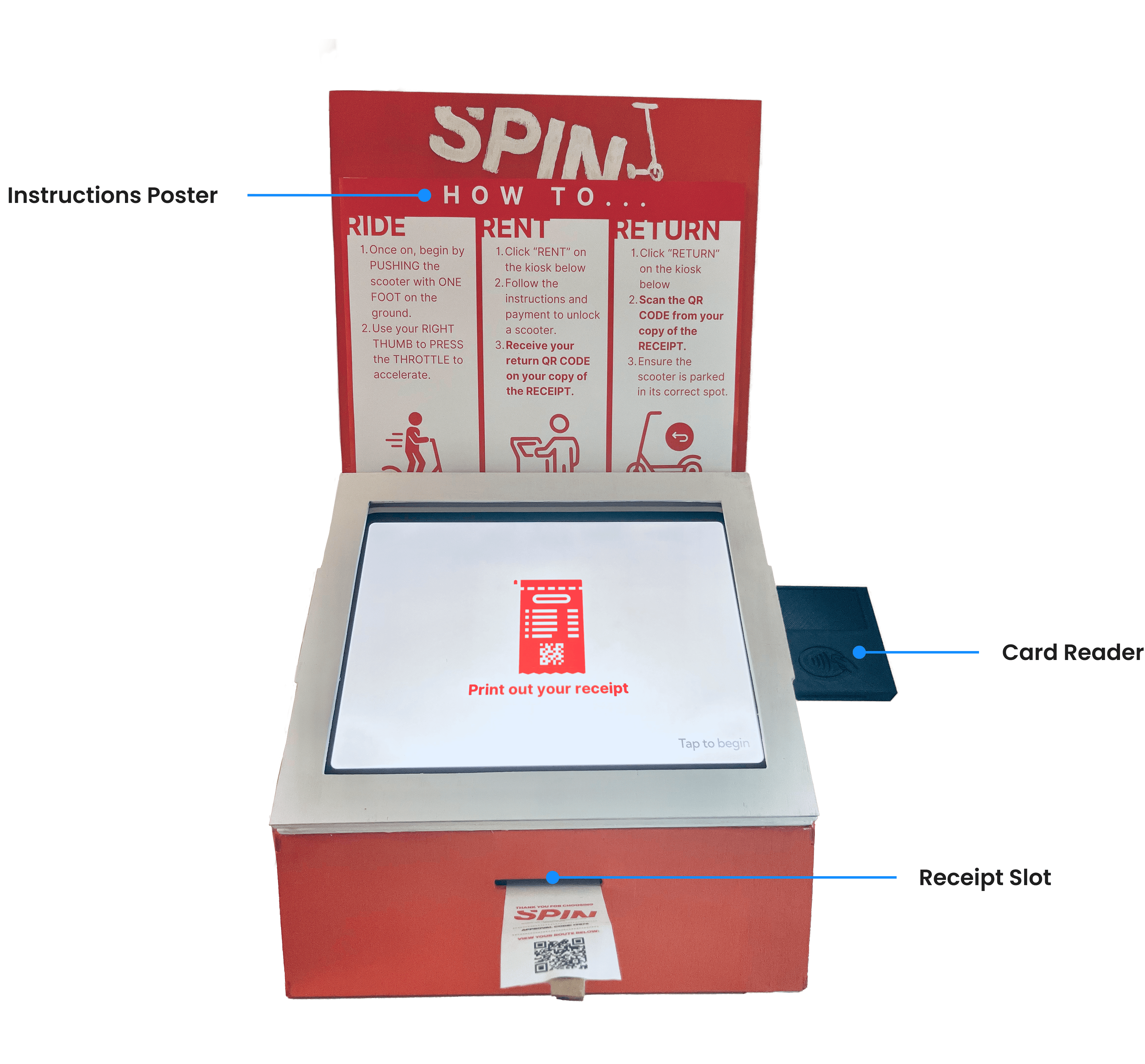
Spin Scooter Kiosk
Bridging Barriers to Entry with an Interactive Kiosk

Overview
This case study showcases how we transformed the Spin App into a kiosk experience, rethinking key interactions for a shared, public environment.
Through research and iteration, our team developed a solution that maintained core functionality while improving accessibility and ease of use.
Objective
Conduct user research and use findings to prototype a fully interactive kiosk.
Timeline
Jan - Mar 2025
Role
UX Researcher, UI Designer
Team
Anson Wen
Diana Serrano
Shane Jovel Caldo

Background
Spin is a micro-mobility company providing electric scooter rental services in cities and college campuses, through a mobile app.
Why Spin?
Based on negative discourse around campus on Spin's user experience, we saw an opportunity to explore the problem space.
User Research Summary
We conducted…
Secondary Research, Fieldwork Observations, & User Interviews
These research methods provided us insight on the challenges users currently face with e-scooters and Spin's mobile interface. Here's what we found:
Barriers to Entry
Users are deterred by the app's account creation process, especially for infrequent or one-time riders.
Mobile Phone Limitations
Dead batteries, poor network, location detection issues, and unfamiliarity with app technologies disrupt users from having a friction-free experience.
Payment Confusion
Users report confusion over pricing, inconsistent receipts, and delays in payment updates.
Safety Issues
Distracted phone usage and improper parking can lead to injuries, raising concerns to new users.
Accessibility
Non-technical users, including older adults, feel excluded from the app-based system.
Using these findings we asked ourselves…
How might we reduce friction in the e-scooter rental process for both new and experienced users?
New
New
Kiosk Prototype
By introducing a kiosk-based system, we aim to streamline the rental process, provide an alternative for users facing mobile app challenges, and improve safety and accessibility on-campus.